Discover the Taste of Architecture | Custom Home Design Canberra
Some buildings are seen; the best ones are discovered. Shiraz introduces Discover the Taste of Architecture — a four-part design philosophy for homes that reward attention over time.
Jul 2, 2026
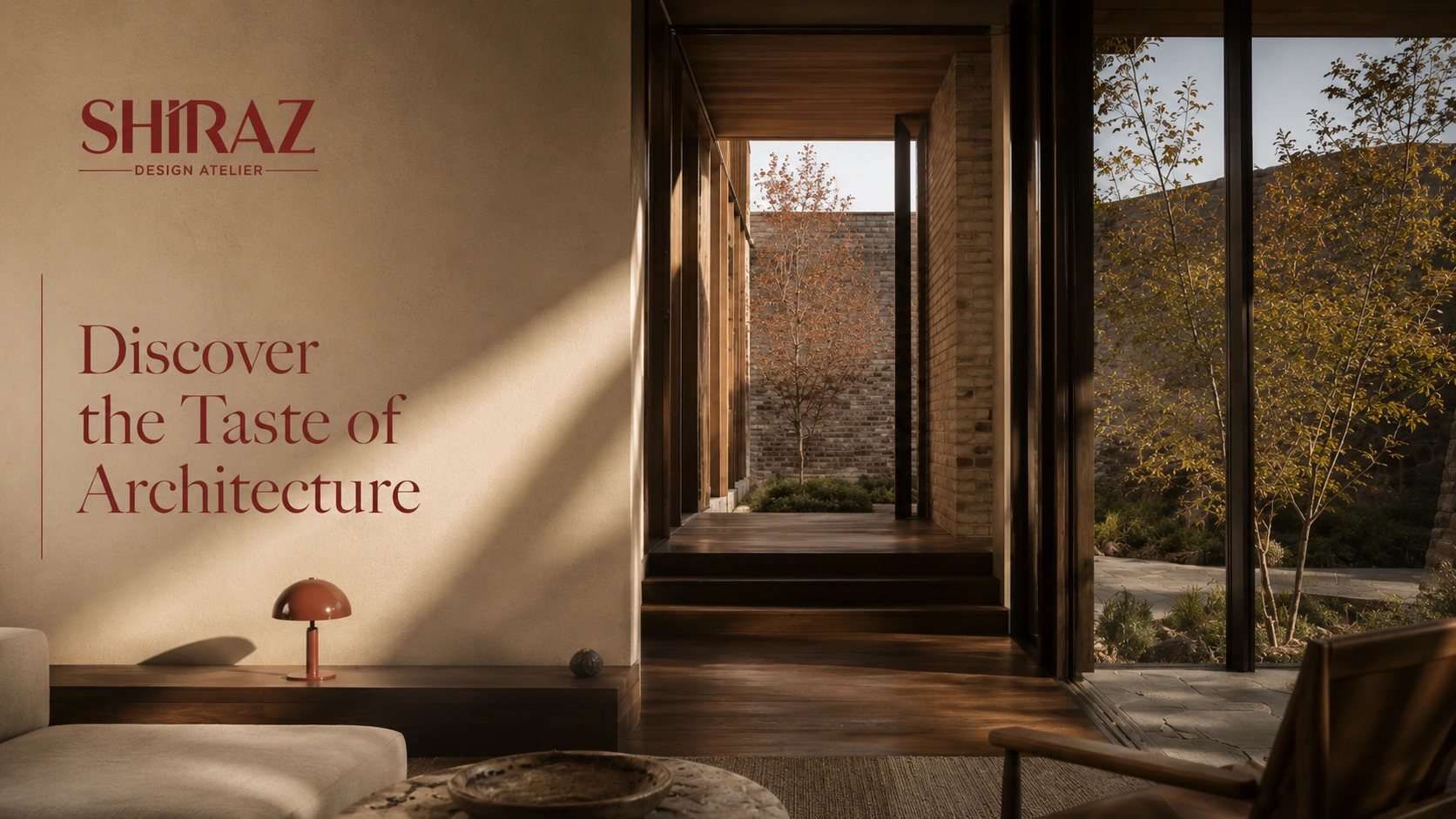
Discover the Taste of Architecture
Shiraz's philosophy of Depth, Voice, Balance and Resonance
Some buildings are seen. Others are slowly discovered — through the body, over time, and again in memory.
By Roy Rostami · Principal, Shiraz
Discover the Taste of Architecture is our method for turning attention into design — and design into memory.
IN SHORT — Discover the Taste of Architecture is Shiraz's philosophy of sensory, site-responsive design. We read memorable places through four connected qualities: Depth, Voice, Balance and Resonance — how architecture unfolds, becomes recognisably itself, belongs to body and land, and remains in memory.
Nothing is tasted from a distance
We can see a mountain from across a valley. Taste asks for something different: closeness, attention and time. Some buildings give themselves away in a photograph; others ask us to approach, cross a threshold, and wait for a view. We remember them not only for how they looked, but for what the body discovered — and for what returned later.
This is what Shiraz means by Discover the Taste of Architecture: not literal taste or a visual style, but our philosophy for making architecture intimate enough to be experienced, coherent enough to be recognised, grounded enough to belong, and precise enough to remain in memory.
A house with architectural taste is not a collection of attractive parts. It is a coherent whole in which site, sequence, material, climate, use, budget and construction reinforce one another. In Canberra, this means cold winters, warm summers and sharp seasonal light enter the first sketch, shaping comfort and atmosphere together rather than as extras added afterward.
Architecture is already multisensory: Juhani Pallasmaa has long argued it cannot be reduced to vision, and Junichiro Tanizaki's writing on soup served in a dark lacquer bowl makes the idea ordinary — dimness delays sight, and darkness makes attention possible. Taste is our name for architecture received by the body, understood over time and carried into memory.
The four qualities of Discover the Taste of Architecture
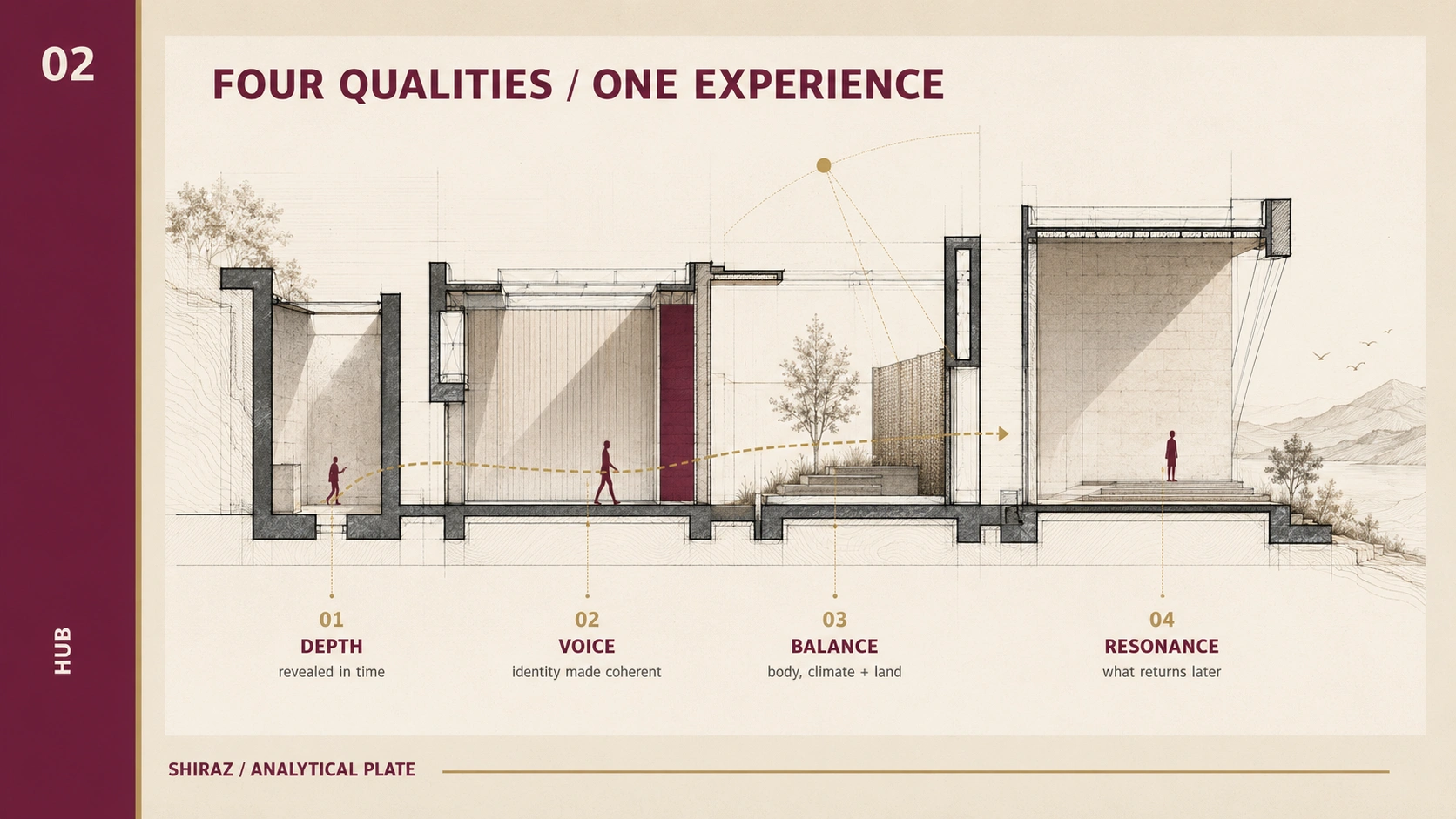
01 Depth — how architecture reveals itself over time. Sequence, threshold, shadow, turn and release make attention grow.
02 Voice — how architecture becomes recognisably itself. Material, construction, proportion and use speak coherently; place tunes them, time tests them.
03 Balance — how architecture negotiates among land, climate and body. Not symmetry or a formula: each force receives the weight it deserves.
04 Resonance — what the complete experience leaves behind. Not a staged feature: repetition turns light, touch, sound and movement into memory.
Why these four words?
The language of tasting — depth, balance, finish, aftertaste — describes an experience unfolding in time better than appearance can. Voice is our architectural addition: the coherent identity we recognise when a building's materials, construction, proportions and use speak together. Voice is the mechanism through which architecture gains character; Resonance is its finish, the aftertaste left by the whole experience.
Explore the four essays
This article defines the shared philosophy. Each of the four supporting essays examines one quality through three buildings and translates its lessons into decisions for a home.
01 · Depth
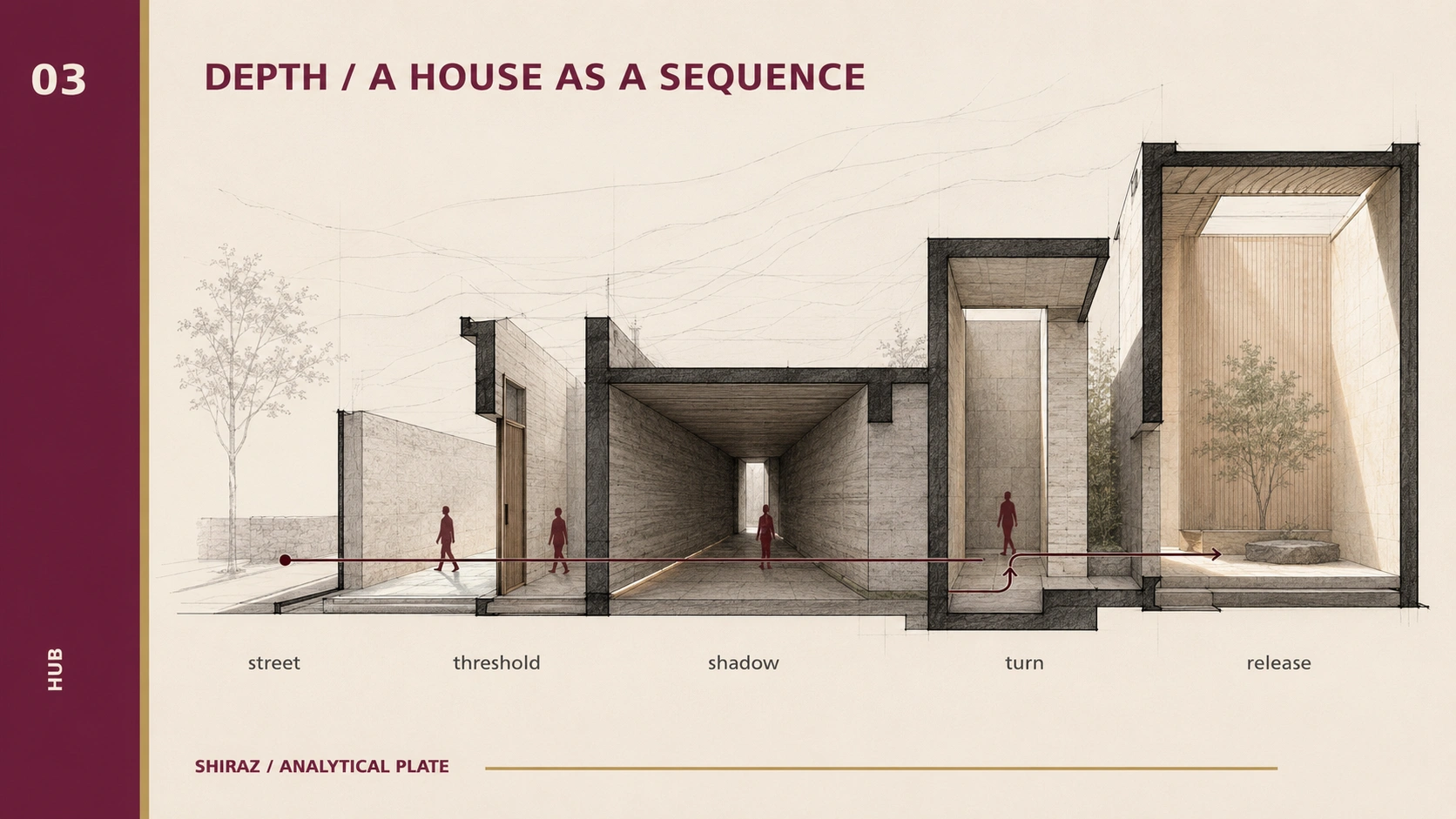
At Therme Vals, Peter Zumthor does not present the building all at once — stone chambers, narrow openings, warm and cool water, and sudden light arrive as a sequence. Depth is not visual complexity; it is meaning revealed through movement and time. In a Canberra home, Depth can begin with a sheltered step, a glimpse of planting beyond the entry, or a view that widens as the ceiling rises.
Try this at home: stand at the front boundary. Can you understand the entire house at once? If so, one well-placed threshold may do more than another decorative feature.
02 · Voice
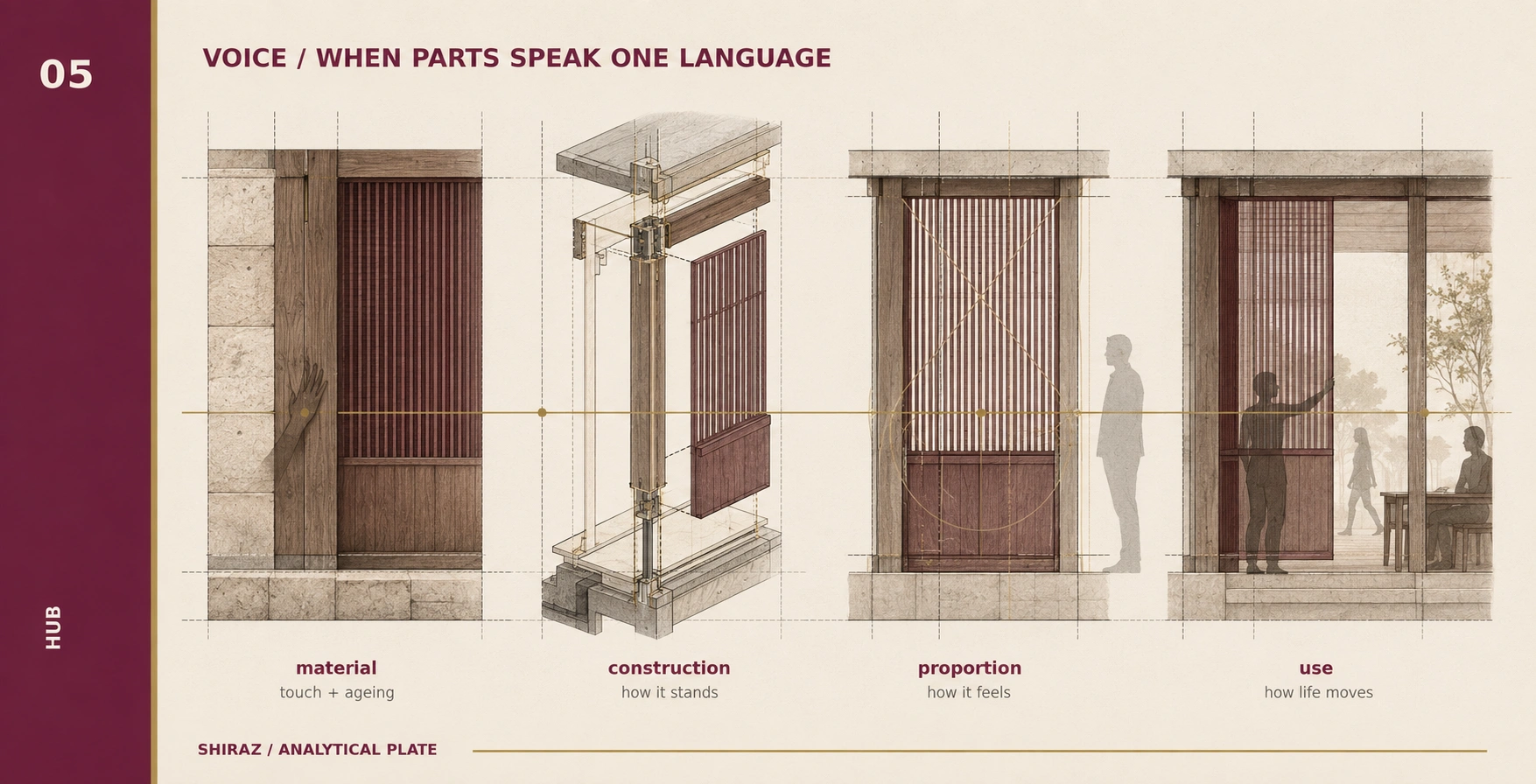
At the Church of the Light, Tadao Ando reduces the room to concrete, proportion, darkness and a cross-shaped opening — identity built from construction and light, not decoration. Voice is not a signature finish: a house becomes recognisably itself when material, construction, proportion and use form one coherent identity, tuned by place and tested by time.
Try this at home: remove one proposed material from the palette. If the design loses its identity, the voice may still be only surface-deep.
03 · Balance
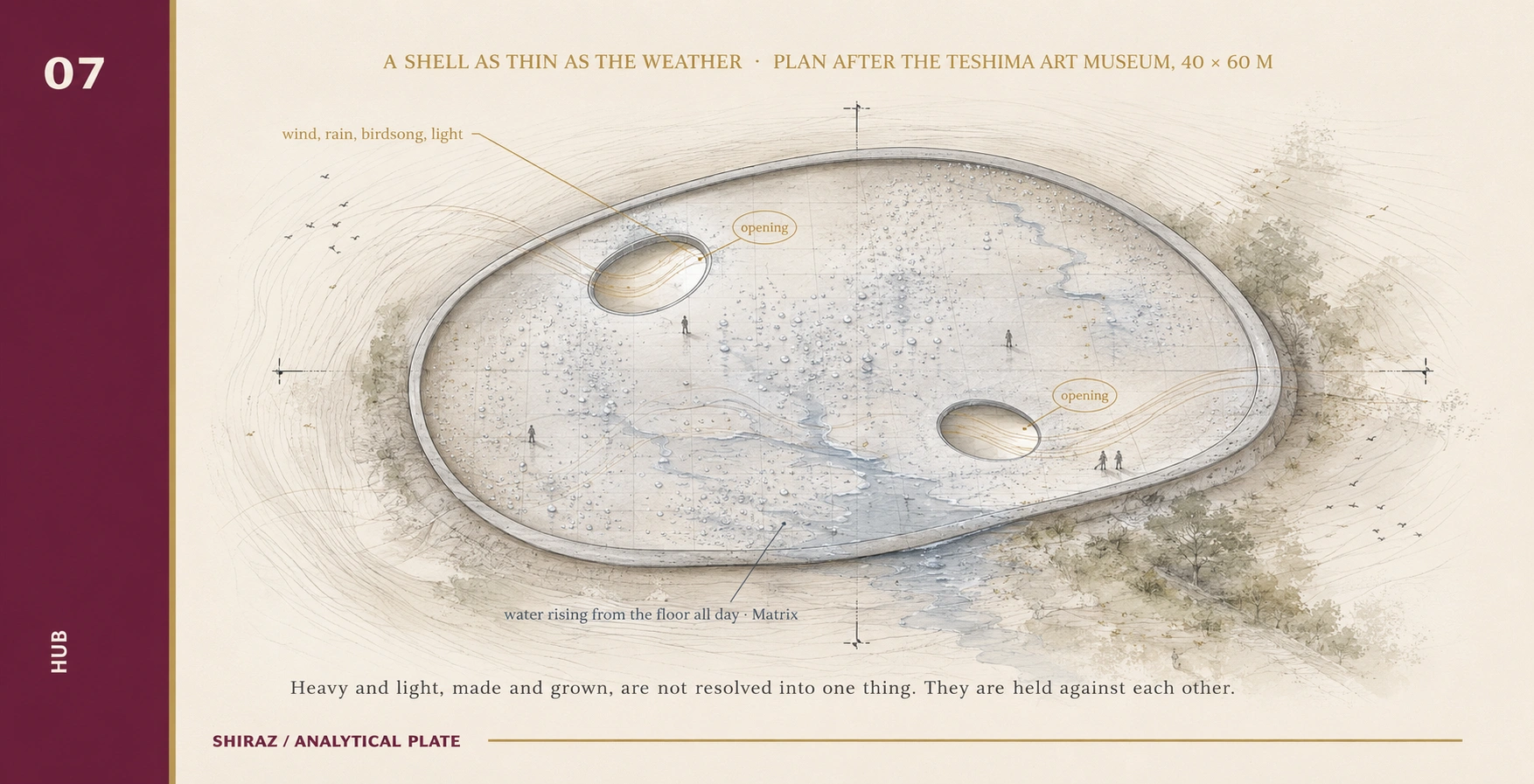
At the Teshima Art Museum, Ryue Nishizawa holds a thin concrete shell against an interior open to wind, light and water — heavy and light remain distinct, but each makes the other more perceptible. Robin Boyd's Fenner House in Red Hill brings the principle to Canberra: offset wings and a falling block organise sleeping and living together. Balance doesn't equalise every force — it gives each the weight it deserves.
Try this at home: draw the winter sun, summer sun, slope, best view, neighbouring windows and daily entry path on one page. Where they negotiate successfully, the plan usually becomes clearer.
04 · Resonance
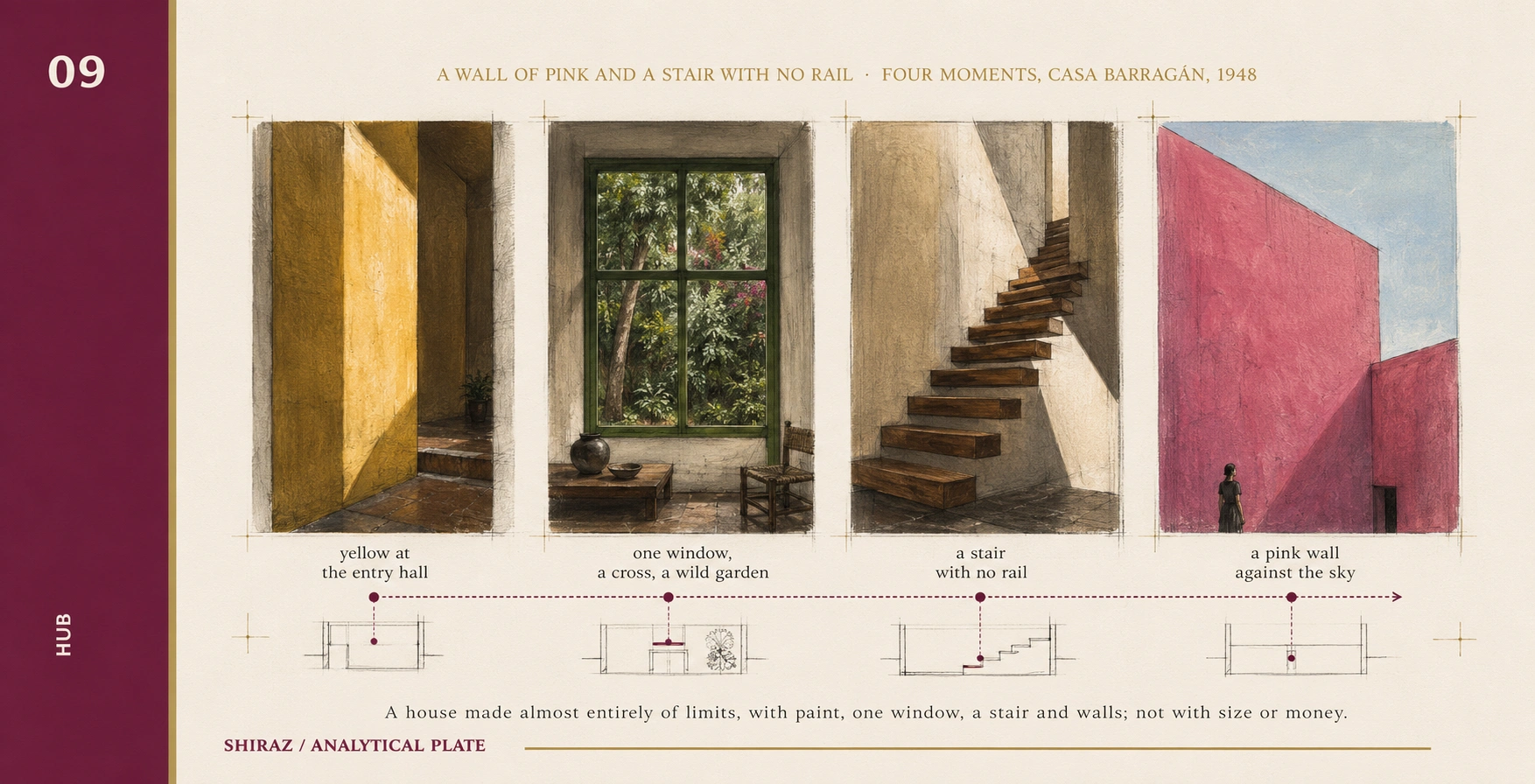
At Casa Luis Barragán in Mexico City, an anonymous street wall gives way to yellow-filtered light, a garden framed by one window, and a stair that makes the body attentive — no single element carries the memory; the sequence resonates as a whole. A Canberra home may resonate more quietly: winter light on the breakfast table, rain across roof and garden, one tree marking the seasons. Resonance is what Depth, Voice and Balance leave behind when lived repeatedly.
Try this at home: instead of asking for one "wow moment," ask which ordinary moment deserves to become extraordinary through repetition.
Twelve buildings through which to discover the taste of architecture
Twelve buildings across the four qualities
Depth: Therme Vals (Peter Zumthor) · Row House in Sumiyoshi (Tadao Ando) · TarraWarra Cellar Door (Kerstin Thompson Architects)
Voice: Dominus Winery (Herzog & de Meuron) · Church of the Light (Tadao Ando) · Marie Short House (Glenn Murcutt)
Balance: Bundanon Art Museum & Bridge (Kerstin Thompson Architects) · Teshima Art Museum (Ryue Nishizawa) · Fenner House, Red Hill (Robin Boyd)
Resonance: Bruder Klaus Field Chapel (Peter Zumthor) · Art Biotop Water Garden (Junya Ishigami) · Casa Luis Barragán (Luis Barragán)
These buildings are not a style guide to copy from — we study the decisions beneath the image: how sequence deepens attention, how construction becomes identity, and how land and climate organise a plan.
What this changes in a Canberra home
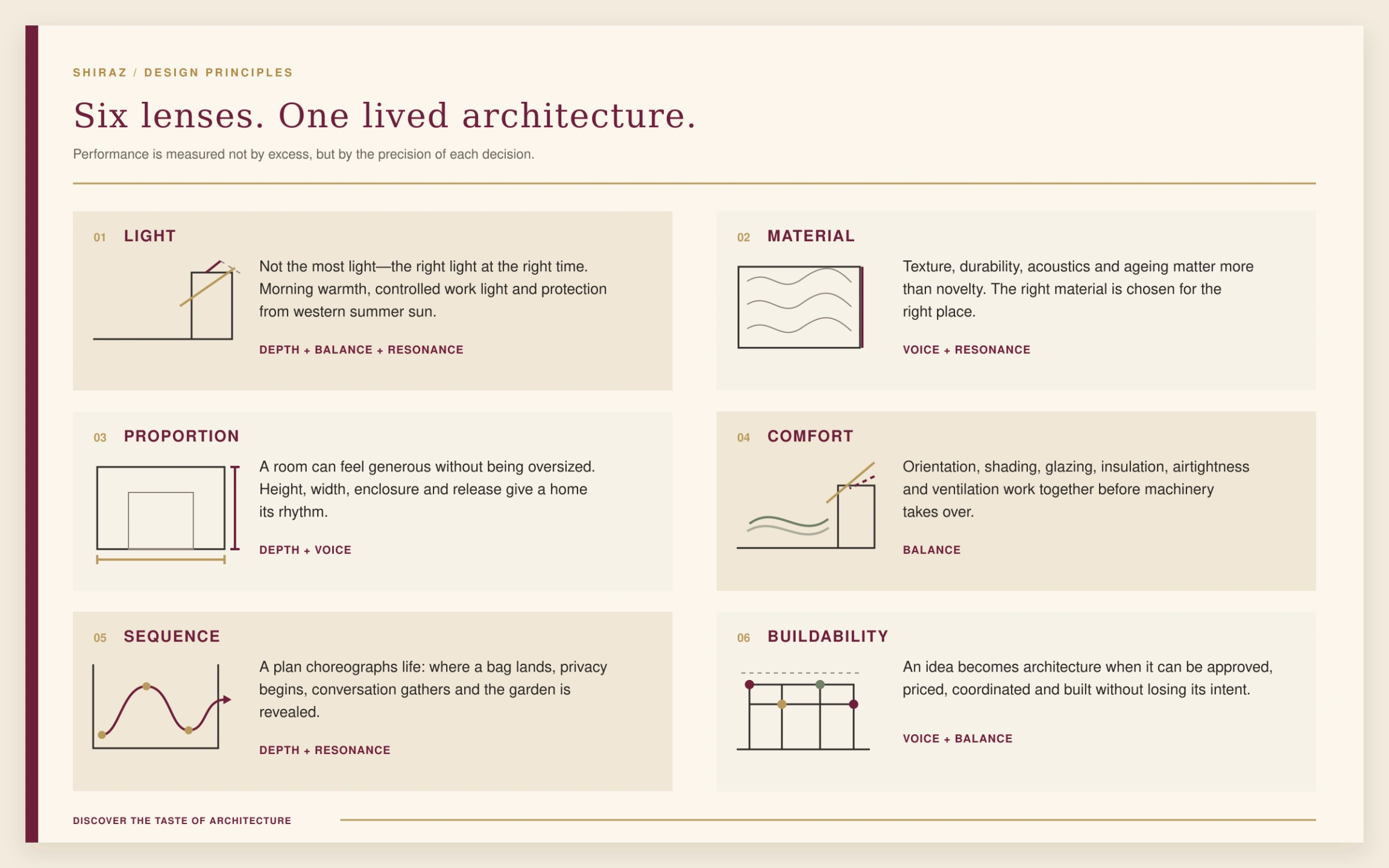
Light — the right light at the right time, not the most (Depth + Balance + Resonance).
Material — texture, durability and ageing over novelty (Voice + Resonance).
Proportion — height, width, enclosure and release give a home its rhythm (Depth + Voice).
Comfort — orientation, shading, glazing and insulation work together before machinery takes over (Balance).
Sequence — a plan choreographs where a bag lands, where privacy begins (Depth + Resonance).
Buildability — an idea becomes architecture when it can be approved, priced and built without losing its intent (Voice + Balance).
Discover the Taste of Architecture does not ask a house to demand attention. It asks the house to keep rewarding it.
How do you discover your own architectural taste?
Collect experiences, not just images: the café where conversation feels easy, the room where you drift toward one window, the garden you remember by smell. Ask four questions — how did it unfold, what gave it identity, how did it relate to body and place, what returned later?
From discovering taste to making architecture
Depth asks us to slow the reveal. Voice asks the parts to speak coherently. Balance locates the building between land, climate and the body. Resonance asks what the complete experience will carry into memory. A photograph may begin the conversation, but architecture is completed by occupation. This is why Shiraz does not define taste as appearance: it is the quality of the relationship a building builds with its inhabitants over time.
Continue the philosophy → Depth: Architecture Revealed in Layers
Planning a project? Explore custom home design · Book a design conversation
Related reading: Passive Solar Design in Canberra · About Shiraz
Frequently asked questions
What is sensory architecture?
Architecture that considers how light, sound, touch, temperature and memory shape a place — not only how it looks.
What does Discover the Taste of Architecture mean?
Shiraz's philosophy for experiencing and designing architecture through the body and over time — how a place unfolds, gains identity, belongs to land and climate, and remains in memory.
What are Shiraz's four qualities?
Depth, Voice, Balance and Resonance — how architecture unfolds, expresses identity, negotiates its setting, and remains in memory.
How does this apply to a Canberra home?
Through practical choices about arrival, winter sun, summer shade, privacy, slope, and material ageing.